Give Ildır a flexible half-day: explore the accessible parts of ancient Erythrai, return through the village, then leave time for a meal or a drink by the water. In suitable weather, that sequence gives the day a natural rhythm. Add travel time separately so that the visit does not become a race to the next stop.
If you are considering staying nearby, the Ildır area guide offers a wider introduction to the village.
Ildır and Erythrai: understanding the names
Ildır, also written Ildırı in official sources, is the present-day settlement. Erythrai is the ancient city whose remains lie in and around it. Both names appear in maps and searches. Save the village arrival point and archaeological-site entrance separately to make finding your way easier.
Settlement in the area reaches back to the Early Bronze Age. Erythrai later became one of the twelve Ionian cities, with trading connections across the Aegean and eastern Mediterranean. Keep that maritime setting in mind: the buildings on the hillside, the coast and the wider settlement make more sense when considered together.
What to look for at Erythrai
The theatre: follow the slope
The theatre sits on the northern slope of the acropolis; the stage building survives as foundations. From the open visitor route, look at the relationship between the seating, the ground beneath it and the performance area below.
Imagine where the audience looked and how the builders used the hillside. A permitted viewpoint with a good overall view can tell you more than a close-up of individual stones.
The Athena sanctuary: notice the stonework
The Athena temple remains occupy the upper acropolis. Research places its earliest construction in the second half of the eighth century BCE, with later additions. Polygonal masonry and an internal ramp are among its distinctive architectural features.
Look for foundation lines and the way stones fit together rather than concentrating only on standing elements. If the approach is open, allow time for both the upper section and the walk back. A sanctuary described in archaeological research may have areas outside the current visitor route.
The walls: consider the city's scale
Research documents a city-wall circuit of approximately five kilometres. That helps put the theatre in perspective: the area around it is only part of the ancient settlement. Any visible wall sections contribute to understanding that larger footprint.
The five-kilometre circuit is an archaeological measurement, not a walking itinerary. Excavated remains and permitted visitor routes are different things. The Türkiye Culture Portal's Erythrai overview provides the archaeological background in Turkish.
Return through the village and pause by the water
After the site, give the village its own share of the visit. On the hillside, your attention is on ancient structures; back in the lanes, you can notice the houses, street pattern and routes towards the water. Leave enough time for a short, unhurried walk instead of treating the village solely as the approach to the ruins.
Artichokes are part of Ildır's agricultural setting. Asking whether an artichoke dish is available in season is a simple way to connect a lunch stop with the place. For seafood, discuss the day's choices, portion and price before ordering. Menus and availability are best judged on the day.
A waterfront break works well at the end because the walking is behind you. Choose a quick drink or a longer meal according to the time left before departure. Be considerate when photographing homes and people going about their day.
A suggested half-day sequence
- On arrival: Locate the site entrance and your return meeting point, then organise water and anything else you need.
- At the ancient city: Begin with the theatre and follow the route open that day. Continue towards the Athena sanctuary if conditions and your energy allow.
- In the village: Take a shorter walk through the lanes, followed by a meal or drink by the water.
The three-day Çeşme itinerary helps fit Ildır into a longer stay. Adding several distant places to the same afternoon reduces the time you have to enjoy this visit.
Before you go: access, preparation and transport
Visiting arrangements: Establish the current entrance conditions and accessible areas before travelling. Excavation reports do not guarantee visitor access to every structure; follow the directions on site. This check matters particularly if archaeology is your main reason for the trip.
Walking preparation: Choose secure shoes with useful grip for sloping, uneven ground. Carry water and sun protection, and aim for cooler hours in hot weather. Ask about a suitable route in advance if anyone uses a pushchair, wheelchair or walking aid. Read when to visit Çeşme alongside the forecast for your actual date.
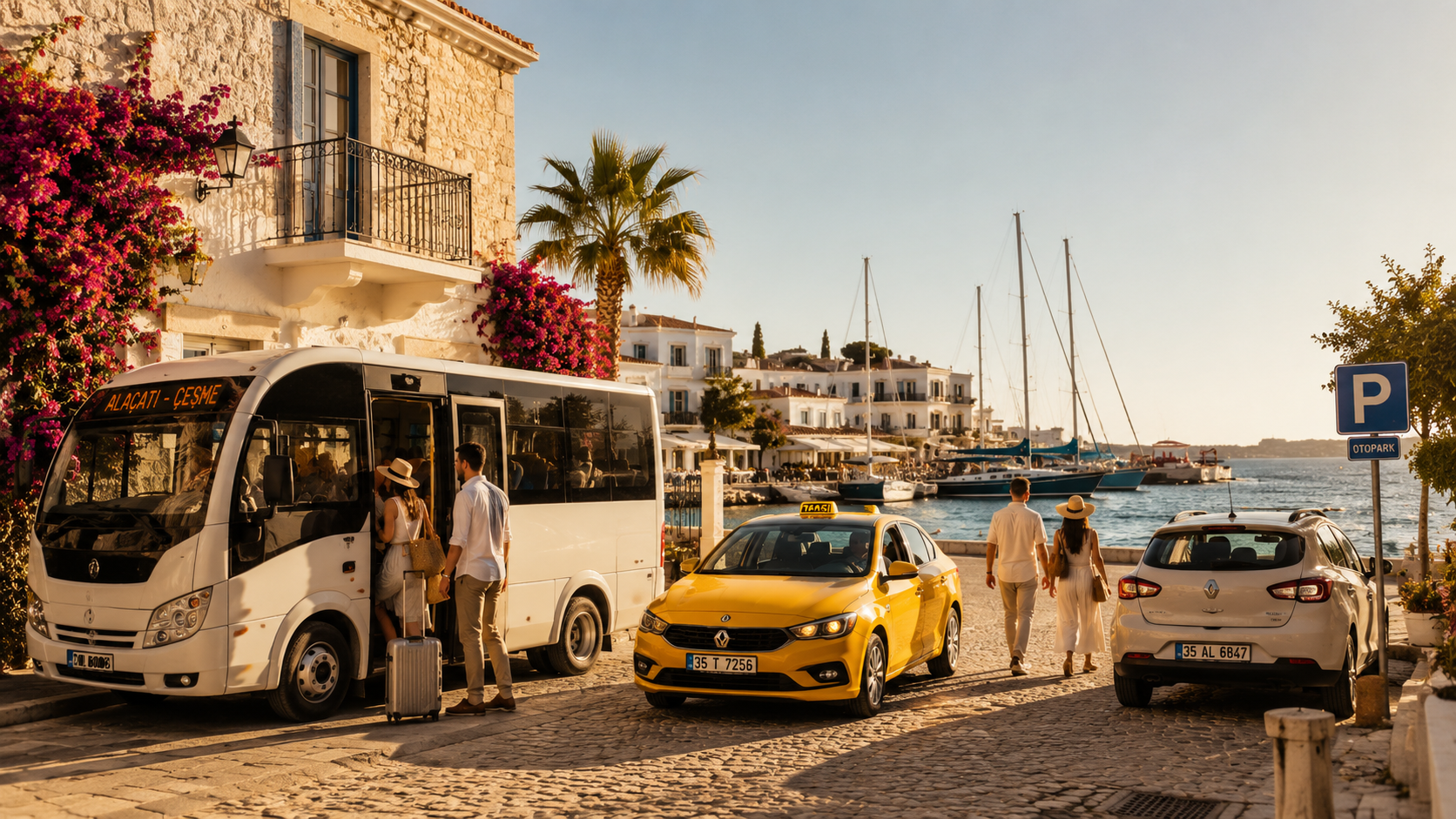
The journey back: Driving time depends on your starting point, traffic and parking. The Çeşme transport guide compares the wider options. For public transport, confirm outward and return services, including any transfer, for your visit day. With a taxi, agree the return meeting arrangement in advance. Çeşme without a car helps assess whether the outing fits your wider transport plans.
Follow the connection to Çeşme Museum
Çeşme Museum, inside the castle, holds Erythrai finds including sculpture, figurines and coins. After seeing where the buildings stood, these objects offer a more intimate scale: the visit moves from the organisation of a city to objects people used and valued.
The museum can sit on another day in Çeşme town rather than becoming a hurried final stop. Use the official Çeşme Museum page for current visiting information. Check the museum and archaeological site separately.
Frequently asked questions
How much time should I allow?
A half-day is a useful starting point for the site, village and a waterfront break. The total depends on your stops and transport; adjust the plan for the weather and open visitor route.
Is Erythrai free and always open?
Check current admission and visiting arrangements before travelling. Older accounts of free or unrestricted access may not describe today's conditions.
Is it worthwhile without a strong interest in archaeology?
Build a shorter visit around the theatre and village walk. Choosing a few main stops and leaving time by the water works well for a group with different interests.