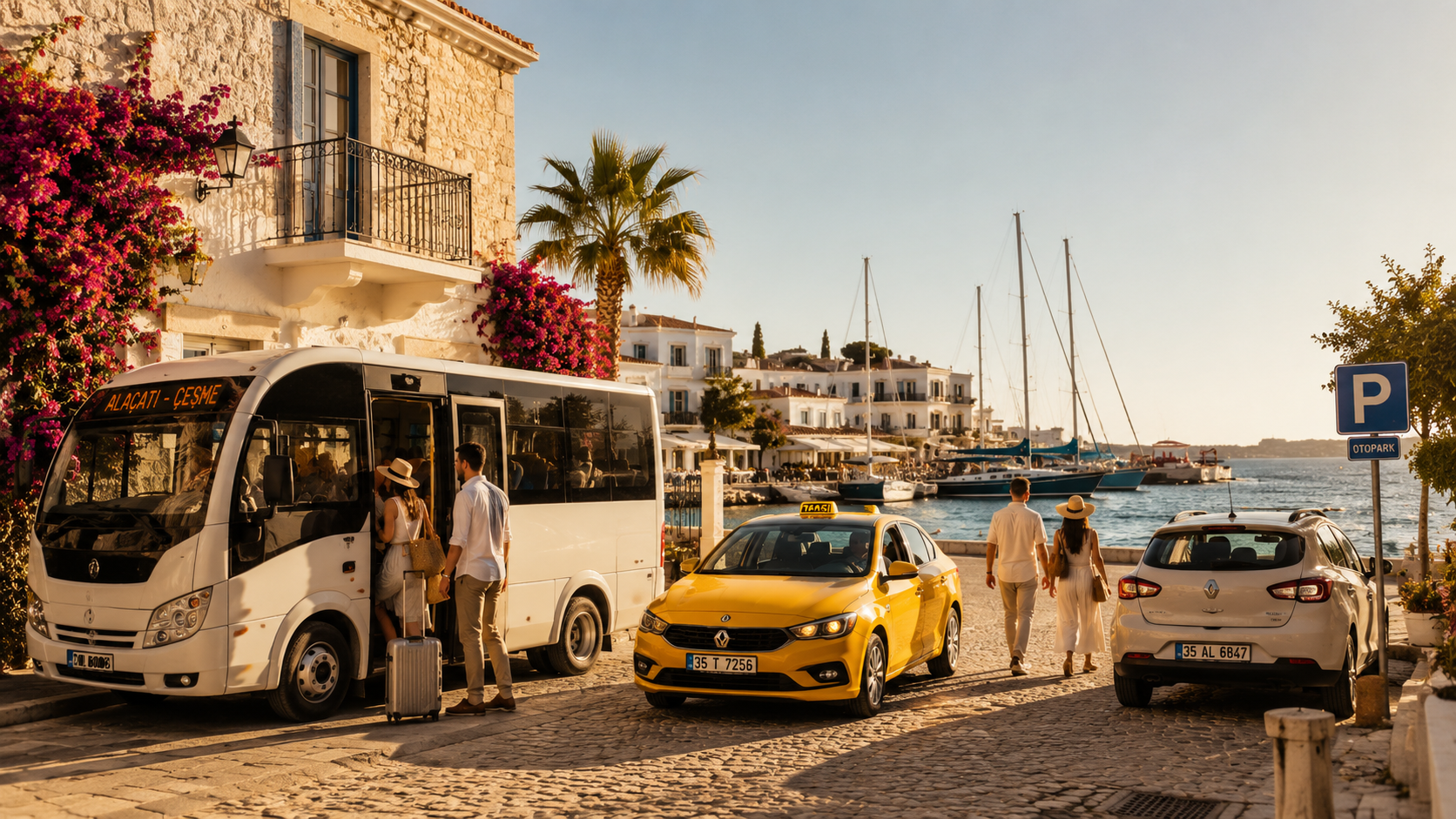
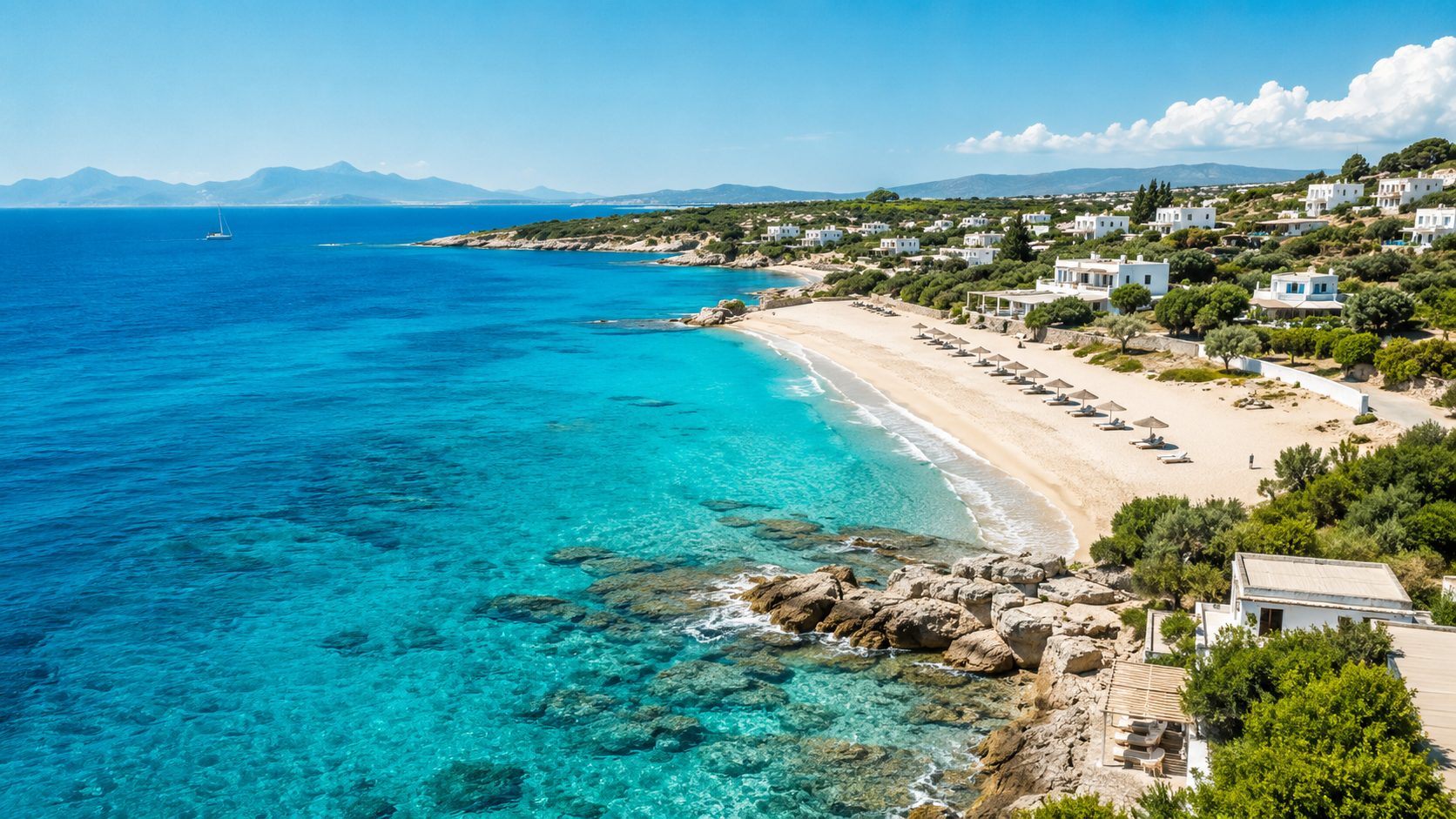
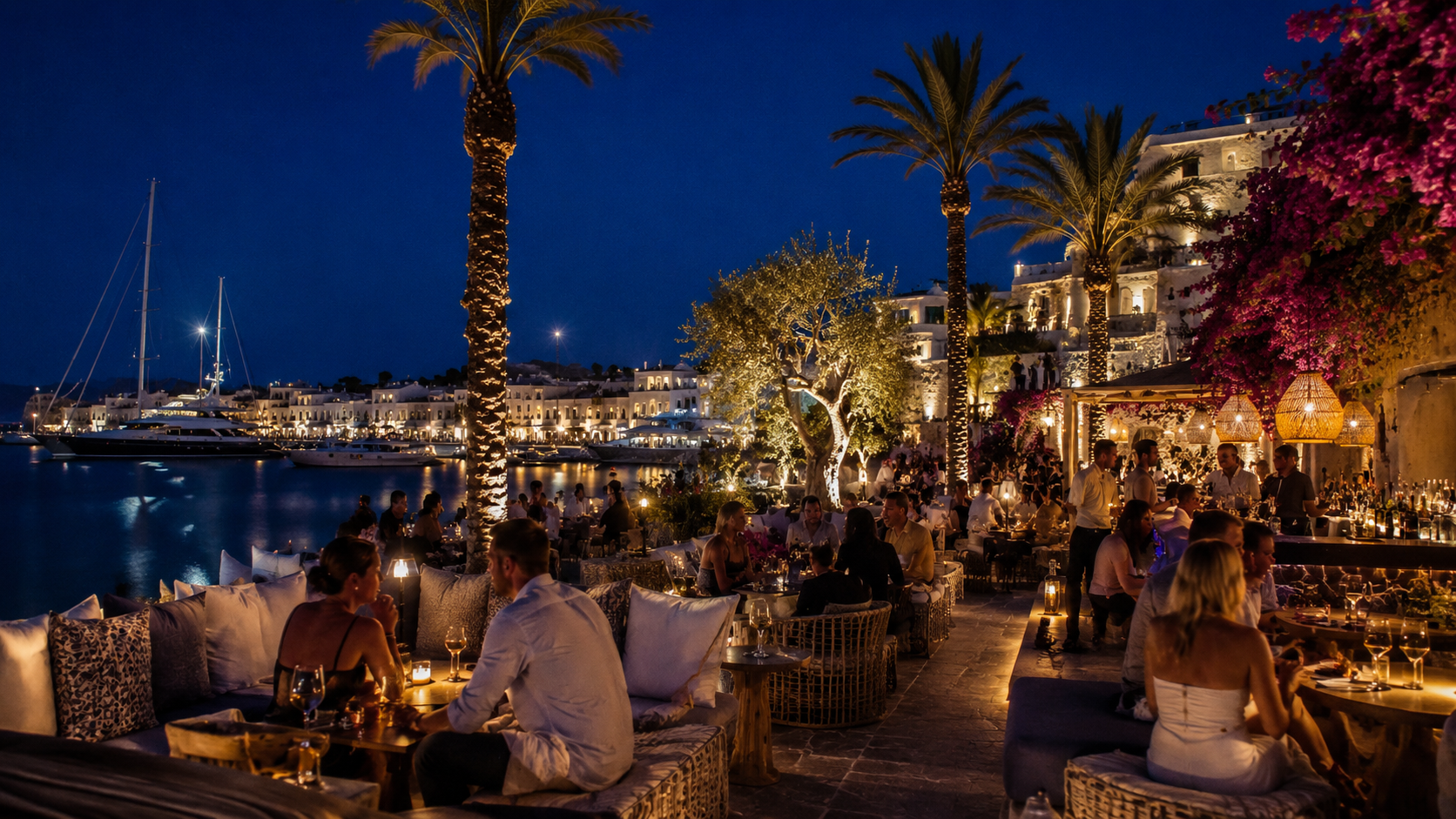
Getting around Çeşme is mostly a question of geography. Çeşme town, Ilıca, Alaçatı, Dalyan, Ayayorgi, Ovacık, Altınkum and Ildır all belong to the same peninsula, but they do not function like neighbourhoods of one compact resort.
That is why there is no universal answer to “Do I need a car in Çeşme?” If your trip is centred on Alaçatı, Ilıca and Çeşme town, local minibuses and taxis can cover a lot. If you want a different beach every day or plan to move between Ovacık, Altınkum, Ayayorgi and more remote coves, a car becomes far more useful.
Which transport works for which plan?
| Your plan | Best starting point |
|---|
| Çeşme town – Ilıca – Alaçatı | Local dolmuş |
|---|
| Evening in central Alaçatı | Walk |
|---|
| One beach and back | Dolmuş if practical, otherwise taxi |
|---|
| Several beaches in one day | Car |
|---|
| Beach club day in Ayayorgi | Taxi or car |
|---|
| Ovacık / Altınkum / Çiftlikköy with multiple stops | Car |
|---|
| Late return from another area | Taxi / transfer |
|---|
| Ildır and more distant parts of the peninsula | Check dolmuş schedule or drive |
|---|
You do not need to choose one transport mode for the entire holiday. A good Çeşme trip often mixes walking, dolmuş, taxis and a car only on the days when it actually saves time.
How the local dolmuş network works
Çeşme Municipality currently lists these local minibus routes:
- Çeşme – Ildır
- Germiyan – Ildır
- Çeşme – Ilıca – Alaçatı
- Çeşme – Dalyan
- Çeşme – Çiftlik
- Çeşme – Ovacık
- Çeşme – Fahrettin Paşa
For most visitors, the Çeşme – Ilıca – Alaçatı corridor is the key route because it joins three of the peninsula’s most useful bases.
Do not build a tight itinerary around an assumed “every 15 minutes” frequency. Minibus service can vary by season and time of day. Late in the evening and outside the busiest summer period, check the return rather than assuming summer-level frequency.
The dolmuş is at its best when you want to avoid parking and move between the main towns. It is less convenient when you want to hop between several beaches in one day.
The easiest car-free corridor: Çeşme town, Ilıca and Alaçatı
This is the part of the peninsula where a car-free trip works most naturally.
Stay in Çeşme town and you can walk around the castle, marina and centre, then take a dolmuş to Ilıca or Alaçatı.
Stay in Ilıca and you can walk to the beach while keeping both Alaçatı and Çeşme town within easy public-transport reach.
Stay in central Alaçatı and you can walk to restaurants, bars and the historic streets, then use a dolmuş for Ilıca and Çeşme town during the day.
If you are choosing accommodation partly around transport, compare Where to Stay in Çeşme, Çeşme or Alaçatı? and Çeşme Without a Car.
When a car really helps
A car becomes valuable once your trip spreads across different coasts of the peninsula.
Altınkum, Pırlanta, Ovacık, Çiftlikköy, Dalyan and Ildır are not all on one simple line. If your idea of Çeşme is “a different beach every day,” driving can save a lot of time.
A car makes particular sense when:
- you want to visit several beaches;
- you plan a beach in one area and dinner in another;
- you are travelling with children and beach gear;
- you want to reach Ildır and less central parts of the peninsula;
- several people are sharing the cost;
- your accommodation is outside the main centres.
Even then, you do not need to drive everywhere. Leaving the car parked for an evening in central Alaçatı is often the more pleasant choice.
When a car is unnecessary
If you stay in central Alaçatı and most of the trip revolves around Alaçatı and Ilıca, a hire car may sit unused for long periods.
The same applies to a short stay in Çeşme town if you mainly want the centre, marina, one or two planned beach days and perhaps Dalyan.
For a short trip, hiring a car for only one or two days and using dolmuş/taxis for the rest can be a better balance.
See How Many Days Do You Need in Çeşme? before deciding how much driving your itinerary actually requires.
Why a car is not always an advantage in Alaçatı
Driving to Alaçatı is simple enough; using the car once you reach the historic centre is the less useful part.
The old centre is made for walking. Streets are narrow and pedestrian activity increases dramatically on summer evenings. Once you are going to spend the night walking between restaurants and bars, there is little benefit in trying to keep the car as close as possible.
On busy days, park outside the tightest part of the centre and walk in. For dinner or nightlife, a taxi or dolmuş can also remove the parking issue completely.
If you are planning a night out, Çeşme Nightlife Guide explains how location changes the transport decision.
Ilıca without a car
Ilıca is one of the easiest beach areas to reach without driving because it sits on the main Çeşme–Ilıca–Alaçatı minibus corridor.
If the plan is simply to spend the day at Ilıca Beach and return, driving may not offer much benefit during busy summer periods. Dolmuş plus a short walk can be easier than looking for parking.
A car becomes more useful when Ilıca is only the first stop and you plan to continue to another beach later in the day.
Use Best Beaches in Çeşme to choose by wind and swimming conditions as well as transport.
Getting to Ayayorgi
Ayayorgi is close to Çeşme town on the map but works differently from Ilıca or central Alaçatı.
For a beach-club day, taxi or car is usually the simpler option. Think about the return before you arrive, especially if you plan to stay into the night.
Demand for taxis can rise when several beach clubs empty at similar times. If alcohol is part of the evening, do not drive.
Trying to combine Ayayorgi, Alaçatı and Ovacık in one day usually adds more transport than the distances suggest.
Why a car is more useful around Ovacık and Altınkum
Ovacık, Altınkum, Pırlanta and Çiftlikköy cover a more spread-out beach area on the southern and western side of the peninsula.
The municipality lists local minibus routes to Ovacık and Çiftlik. That does not mean every cove or beach entrance has a convenient stop at the gate. Check the last section of the journey before relying on public transport.
If you want to visit more than one beach, carry a lot of beach gear or continue to sunset somewhere else, a car is particularly useful here.
For a single destination, a taxi may still make more sense than hiring a car for the whole day.
Dalyan by public transport
Çeşme Municipality lists a Çeşme – Dalyan dolmuş route.
That makes Dalyan one of the places you can reasonably visit from Çeşme town without hiring a car, particularly for a meal or a short visit.
For a late dinner, check the return service rather than assuming the final dolmuş will fit your plans. A taxi is an easy backup.
A car becomes more useful if Dalyan is only one stop in a wider north-coast day.
Can you reach Ildır without a car?
Yes. The municipality lists both Çeşme – Ildır and Germiyan – Ildır routes.
The difference is flexibility. Ildır sits farther outside the central Çeşme–Ilıca–Alaçatı corridor, so the timetable matters more.
If you are travelling without a car, check the return before setting out, particularly outside the main summer season. If you want to linger without watching the clock, driving is easier.
What role does ESHOT play?
ESHOT is useful for connecting Çeşme with the wider İzmir public-transport network, but it is not the system you use for every local beach.
The official 2026 İzmir tariff lists 760 Çeşme – Urla and 906 Çeşme – Urla.
For day-to-day visitor movement inside the peninsula, local dolmuş, taxis and private cars are usually more relevant.
Travel from İzmir to the peninsula is a separate topic; this guide begins once you are already here.
Do you need an İzmirim Kart?
If you plan to use ESHOT and İzmir’s municipal public transport, an İzmirim Kart is useful.
The official İzmirim Kart site states that the system covers İzmir municipal buses, metro, trams, ferries and other public transport, and it also offers a digital-card option.
Do not assume that a local Çeşme dolmuş is simply another ESHOT bus. Check the current payment method and fare when boarding.
That distinction matters especially for international visitors who may expect one card to work on every minibus.
When taxis make the most sense
Taxis are extremely useful in Çeşme when the rest of your trip is mostly walkable.
They can be the better option if:
- you only need one or two distant beach trips;
- you are going out at night and drinking;
- you stay in Alaçatı or Çeşme town and walk most of the day;
- you do not want to spend time parking;
- hiring a car would mean paying for it while it sits unused.
If you take several taxis every day, however, the total can climb quickly and a car may make more sense.
We deliberately do not freeze a taxi fare into this guide. Tariffs and trip conditions can change; ask for an approximate fare before a longer ride.
Night transport: plan the return
A transport plan that works at noon may not work the same way after midnight.
If you stay in central Alaçatı and go out there, being able to walk home is a major advantage.
If the night ends in Ayayorgi, Ovacık or another part of the peninsula, taxis and transfers become more important.
On busy Friday and Saturday nights, many people may request cars at the same time after large events. Arrange the return before you are standing outside with everyone else.
See Çeşme Nightlife Guide for a fuller area-by-area nightlife plan.
Parking: what to expect
Parking pressure is not equal across Çeşme.
Central Alaçatı, the Ilıca beachfront, Ayayorgi and popular beaches can be much harder during the busiest summer hours. Arriving early can make a significant difference.
Do not park simply because a space looks empty. Check road access, local restrictions and whether you are blocking an entrance.
In Alaçatı, parking outside the most crowded core and walking in is often the better choice.
For beach clubs and individual beaches, check whether private parking exists before setting out; that information changes from place to place.
Is Çeşme walkable?
Individual centres are. The peninsula as a whole is not.
Çeşme town and central Alaçatı are very walkable, and parts of Ilıca also work well on foot. Walking from Çeşme town to Alaçatı or from Alaçatı to Ayayorgi is not a practical everyday transport plan.
This distinction is easy to miss on a map. “Çeşme” is not one continuous resort strip.
Choosing accommodation in the area where you will spend most of your time is therefore one of the best transport decisions you can make.
What about cycling?
Çeşme Municipality publishes marked cycling routes across the peninsula. One example is the 30.7-kilometre Çeşme–Alaçatı route, which runs from the port through Çiftlikköy, Pırlanta, Altınkum, Azmak and Port Alaçatı before reaching Alaçatı.
That shows the peninsula can be explored by bike, but this is a recreational route rather than a simple hotel-to-beach commute.
Summer heat, wind, road surface and traffic all matter. Experienced cyclists may enjoy it; most visitors should not assume a bicycle can replace every other form of transport.
Families with children
Transport priorities change when you are carrying a stroller, towels, toys and beach bags.
Staying somewhere such as Ilıca, where you can walk to the beach, may be easier than loading a car every morning.
If you want to visit different beaches, however, a car becomes much more useful for families.
For an evening in Alaçatı, consider parking outside the centre and walking, or taking a taxi rather than navigating the busiest streets with the car.
Build days by area, not by checklist
The easiest way to reduce transport time is to combine places that make geographical sense.
Alaçatı + Ilıca day: beach in Ilıca, afternoon/evening in Alaçatı. Easy by dolmuş.
Çeşme town + Dalyan day: start in the centre, continue to Dalyan. Dolmuş or taxi can work.
Altınkum + Ovacık day: keep the day on the same side of the peninsula. A car is more useful.
Ayayorgi day: let the beach and evening stay in the same area; if you remain late, plan the ride home.
This is far more efficient than trying to cross the peninsula several times in one day.
If you are staying without a car, your hotel location matters most
For a car-free trip, accommodation determines how easy everything else feels.
Choose central Alaçatı if restaurants and nightlife are a priority.
Choose Ilıca if walking to the beach and keeping easy links to both Alaçatı and Çeşme town matter most.
Choose Çeşme town if the marina, castle and central waterfront are the focus.
If your priority is remote coves and a different beach every day, depending entirely on public transport from one central base becomes less attractive.
Çeşme Without a Car goes deeper into this decision.
Common transport mistakes
Assuming everything is close. The peninsula is more spread out than a resort map suggests.
Planning the outward trip but not the return. This is particularly risky after beach-club nights.
Driving everywhere in central Alaçatı. Walking is usually easier once you arrive.
Assuming the dolmuş has one fixed frequency all year. Service patterns can vary.
Changing areas too often in one day. A short holiday quickly becomes a driving holiday.
Forgetting parking time. In summer, searching for a space can undo the time a car was supposed to save.
Feeling obliged to drive because you hired a car. Park it when walking or dolmuş makes more sense.
Final answer: do you need a car in Çeşme?
Mostly Alaçatı, Ilıca and Çeşme town: no, not necessarily.
A different beach every day: a car is much easier.
A short two- or three-day stay in a central base: dolmuş plus taxis can cover most plans.
Travelling with children or lots of beach equipment: a car helps considerably.
Nightlife is the priority: where you stay may matter more than whether you have a car.
Ildır, Ovacık, Altınkum and several coves in one trip: having a car for at least some days will make the trip easier.
The best transport plan in Çeşme is not “car or no car” for the entire holiday. Decide where you want to spend each day, then use the mode that creates the least friction for that particular plan.