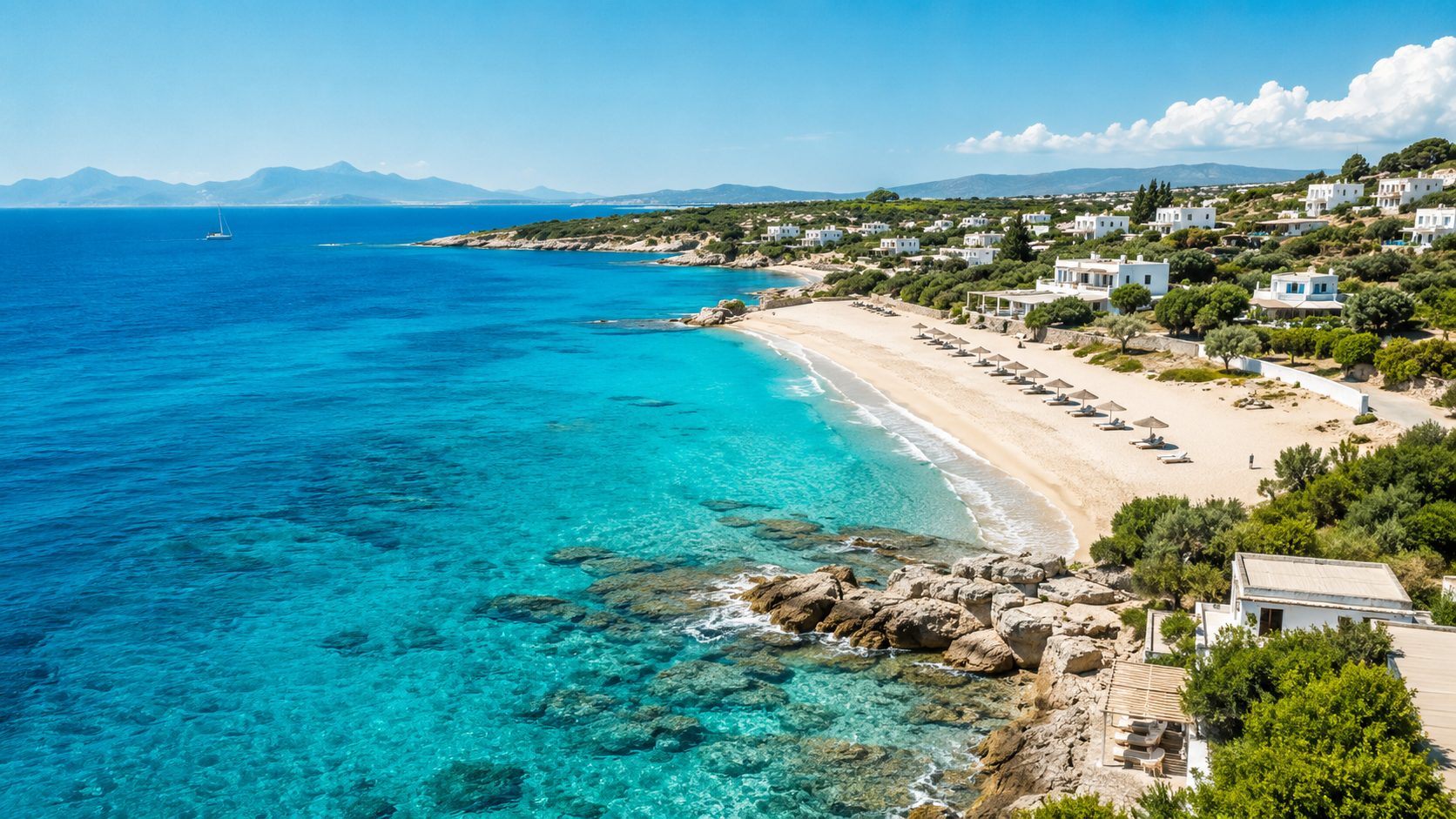
Çeşme · Beach guide
Best Beaches in Çeşme: The Beaches Worth the Drive
Ilıca, Altınkum, Pırlanta, Kocakarı, Ayayorgi, Delikli Bay and Çark compared by water, wind, access and the kind of beach day each one suits.
Read guide9 min

Thermal water guide
Çeşme’s thermal side is easy to miss if you only think of the peninsula in terms of beaches and summer nightlife. In Ilıca, naturally hot spring water reaches the sea; around Şifne, thermal water is more closely associated with pools and spa or bathing facilities. Understanding that difference makes it much easier to decide whether thermal water should simply be part of a beach day or a separate stop in your itinerary.
5 min read
At a glance
Çeşme's thermal springs are not confined to hotel spas.
Along the Ilıca and Şifne coast, naturally heated underground water reaches the surface close to the Aegean. In Ilıca, that water mixes directly with the sea. Around Şifne, the thermal identity is more closely tied to pools and bathing facilities.
The distinction matters because these are two different ways to experience the same geological feature.
Ilıca is the simplest place to encounter Çeşme's thermal springs without planning a separate wellness day.
Hot spring water emerges close to the coast and beneath the sea before mixing with the surrounding seawater. You may notice warmer patches while swimming, followed a short distance later by ordinary sea temperature.
The whole beach is not warm, and Ilıca should not be imagined as a giant outdoor thermal pool.
That is also why the thermal springs fit so easily into a normal visit. You can spend the morning swimming and enjoying the beach without treating the thermal water as a separate attraction.
If you are comparing Ilıca with other parts of the peninsula, our guide to the best beaches in Çeşme explains how the main swimming areas differ.
Official information for the Çeşme thermal springs gives a source temperature of around 58°C.
That figure refers to the spring water itself, not the temperature of the sea at Ilıca.
Once the hot water reaches the coast, it mixes with a far greater volume of seawater. What you notice while swimming is therefore a change in temperature rather than water anywhere near the temperature of the original spring.
For travellers, this distinction is more useful than the number itself: come expecting a beach with natural thermal activity, not a hot pool in the sea.
Şifne lies northeast of Ilıca and has a stronger association with traditional thermal bathing.
The source water here is recorded at around 38°C, but again, that does not mean every pool or facility will be kept at exactly that temperature.
The main difference from Ilıca is practical.
In Ilıca, thermal water comes naturally into a beach day. Around Şifne, you are more likely to visit specifically because you want to spend time in thermal water.
For a short first trip to Çeşme, that distinction can save you from overplanning. If you are simply curious about the springs, Ilıca may be enough. If you want a thermal pool to be a meaningful part of the day, Şifne and local thermal facilities deserve a closer look.
A spa and a thermal facility are not automatically the same thing.
A hotel may have treatment rooms, a sauna, steam areas and conventional swimming pools without using natural thermal spring water. Conversely, a property with thermal water may offer a relatively simple bathing setup rather than a large wellness complex.
You may also encounter thalasso facilities. These use seawater and should not be confused with pools supplied by a natural hot spring.
If thermal water is the reason for your visit, ask one clear question before booking:
Which pool is supplied with natural thermal spring water?
Then check whether non-hotel guests can use it.
Day access, reservations, child policies, indoor and outdoor pools and seasonal availability can all vary. Current information from the property is more useful than an old review or travel article.
Most first-time visitors do not need to dedicate a full day to Çeşme's thermal springs.
The easiest approach is to make Ilıca one of your beach stops. You can swim for a few hours, notice the warmer areas in the water and continue to Alaçatı or another part of the peninsula later in the day.
That works particularly well on a short stay because the thermal feature becomes part of an existing plan rather than another item you have to fit into the itinerary.
Our 3 days in Çeşme guide gives a broader idea of how Ilıca can fit alongside other areas.
If you specifically want thermal pools, spa treatments or several hours in a bathing facility, allow more time and treat it as a separate activity.
The springs themselves are not seasonal.
What changes is the way most visitors use them.
During warm weather, Ilıca makes immediate sense because you are already there to swim. In cooler months, an indoor or controlled thermal pool may be more appealing than the open sea.
That does not mean every thermal facility follows the same year-round schedule. Pools, day access and spa departments may operate differently outside peak season.
If you are considering Çeşme beyond summer, our when to visit Çeşme guide looks at the wider seasonal picture.
Older descriptions of Çeşme and Şifne sometimes list a wide range of conditions that thermal water is said to help.
Those claims should not be treated as medical advice.
There is nothing unusual about visiting a thermal pool simply because warm water feels relaxing or because you want to experience a natural feature of the area. But if you are considering thermal bathing for a specific medical condition, base that decision on advice from an appropriate healthcare professional rather than tourism material.
Very hot water is not suitable for everyone, particularly for prolonged periods.
Ilıca's long, shallow shoreline is one reason families often include it in a Çeşme trip.
You do not need to organise a separate thermal activity for children. Treat the visit as a normal beach day; the natural springs are simply part of the setting.
Shallow water does not remove the need for supervision.
If you are considering a thermal pool rather than the beach, check the property's rules in advance. Some pools may have age restrictions or separate policies for children.
For travellers staying without a rental car, Ilıca is generally easier to build into a standard Çeşme itinerary.
Çeşme town, Ilıca and Alaçatı form one of the peninsula's most useful travel corridors, so combining Ilıca with another stop is relatively straightforward.
Şifne requires a little more planning. Transport frequency and connections may vary with the season, so check your options for the day you intend to visit rather than relying on an old timetable.
For the wider transport picture, see Çeşme without a car and our getting around Çeşme guide.
For a first visit, the choice is usually simple.
Choose Ilıca if you want a beach day that also gives you a sense of Çeşme's natural thermal springs.
Look more closely at Şifne if thermal bathing itself is one of the reasons you are making the trip.
You do not need to visit both to understand this side of Çeşme. For most short itineraries, Ilıca introduces the thermal landscape without demanding extra time. Şifne becomes more worthwhile when you are staying longer or specifically want a thermal pool or bathing facility.
The useful question is not which place is “better”, but whether you want thermal water as part of a beach day or thermal bathing as the main activity.
Treat Ilıca as a normal beach visit; no special preparation is required to encounter its thermal side. If you plan to use a thermal facility, confirm which pool actually contains natural thermal spring water, whether day guests are accepted and which facilities are operating on your date. For medical use of thermal water, rely on professional healthcare advice rather than tourism claims.
Editorial
Çeşme · Beach guide
Ilıca, Altınkum, Pırlanta, Kocakarı, Ayayorgi, Delikli Bay and Çark compared by water, wind, access and the kind of beach day each one suits.

Çeşme · 3-day Çeşme itinerary
A realistic first-time plan for three days in Çeşme: Ilıca and Alaçatı, Çeşme town and the north coast, then Ildır and Erythrai — with a beach-focused alternative.

Çeşme · When to visit
The best time to visit Çeşme depends on what you want: June and September for balance, July–August for peak summer, and May or October for quieter trips.

Çeşme · Çeşme planning guide
Can you visit Çeşme without a car? Compare Alaçatı, Ilıca and Çeşme town, with practical advice on minibuses, airport transfers, taxis and car rental.
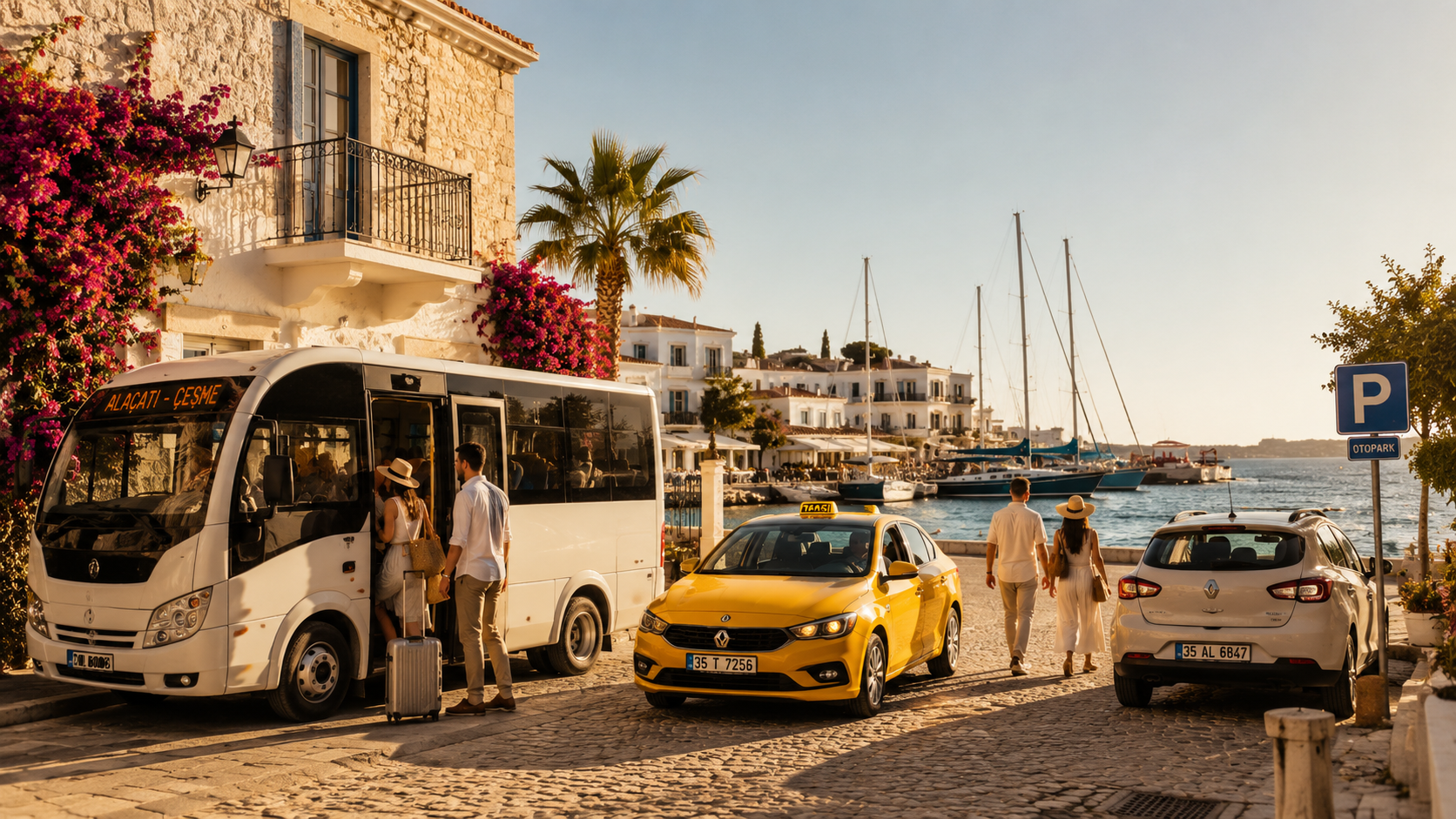
Çeşme · Getting around Çeşme
Do you need a car in Çeşme? Compare local dolmuş routes, taxis, driving, parking and the easiest ways to move between Alaçatı, Ilıca, Ayayorgi, Ovacık and the rest of the peninsula.

Çeşme · Çeşme guide
Where to stay in Çeşme: compare Alaçatı, Ilıca and Çeşme town for beaches, nightlife, walkability, families and travelling without a car.
Last verified: